When Alaska Drops to Minus 72°F
There are cold places. And then there is Alaska in the middle of winter.
At temperatures that can fall far below zero, ordinary activities become adventures of their own. Cars need to be treated differently. Exposed skin becomes a serious concern. Even something as simple as stepping outside requires preparation.
Yet extreme cold has its own strange beauty.
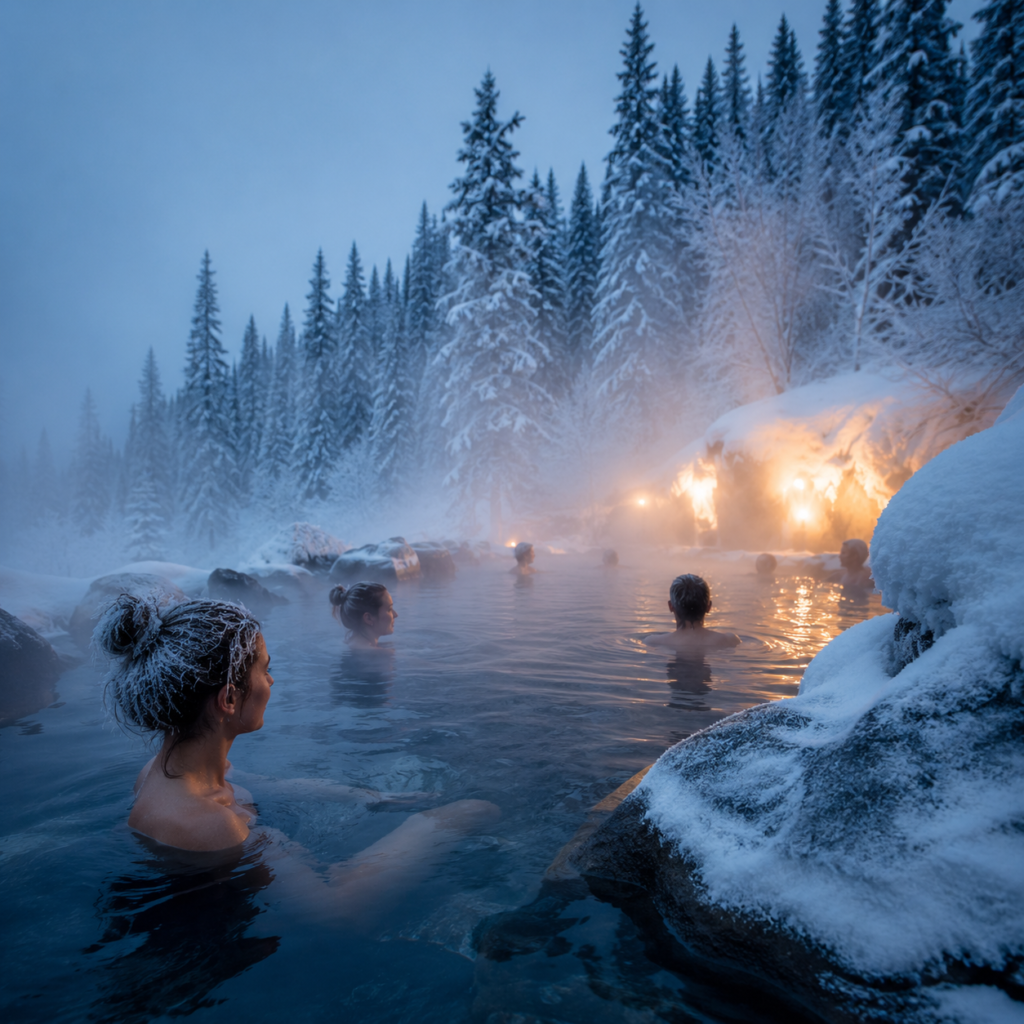
In the Alaskan interior, winter can transform the landscape into something almost otherworldly. Trees become frozen sculptures, the air turns crisp and crystalline, and snow covers the wilderness in every direction. At places like Chena Hot Springs, steam rises from warm water while the temperature outside can be dozens of degrees below freezing.
For visitors accustomed to ordinary winter weather, minus 72°F is difficult to imagine.
At that temperature, the cold isn’t simply uncomfortable. It changes the way the entire world behaves.
Breath freezes almost immediately. Vehicles can become reluctant to cooperate. Metal becomes painfully cold to touch. Ordinary mistakes that might be harmless in warmer weather can become serious problems.
And yet people still live, work, travel, and explore in these conditions.
That is part of what makes Alaska so fascinating.
The environment doesn’t adjust itself to the traveler. The traveler has to adjust to the environment.
Chena Hot Springs offers one of those remarkable contrasts that seem almost impossible until seen firsthand.
Imagine standing outdoors surrounded by an Alaskan winter, with temperatures plunging far below zero, while warm mineral water creates clouds of steam around you.
The landscape is frozen.
The water isn’t.
That contrast captures something essential about Alaska. Extremes exist side by side.
Fire and ice. Darkness and brilliant sunlight. Vast wilderness and small communities.
For travelers, these contrasts can be more memorable than any conventional attraction.
Extreme travel isn’t necessarily about proving toughness.
Sometimes it’s about experiencing something that cannot be replicated somewhere else.
A warm spring in ordinary weather is pleasant. A warm spring surrounded by an Arctic landscape is unforgettable.
The cold becomes part of the experience rather than something to escape.
And perhaps that’s one reason difficult journeys stay with us. They demand attention.
When the environment is challenging, travelers notice more. They notice the weather, the landscape, the people around them, and even the simple comforts that might otherwise go unnoticed.
If you’re visiting an extremely cold destination, dress for the environment rather than the photograph. Layer properly, protect exposed skin, keep electronics and batteries warm, and always check local weather and road conditions before heading into remote areas.
“The coldest winter I ever spent was a summer in San Francisco.” This quote is often attributed to Mark Twain, although its true origin is disputed.
Some destinations are memorable because they’re beautiful. Others are memorable because they challenge our idea of what is possible.
If you would gladly trade a tropical vacation for an unforgettable adventure in the frozen North, share this newsletter with a fellow traveler.
Editor’s Note: Some newsletters are original pieces created by Dr. Cox’s social media manager with the assistance of AI, inspired by stories and themes from his book.